Why Does My Toilet Keep Running After Flushing?
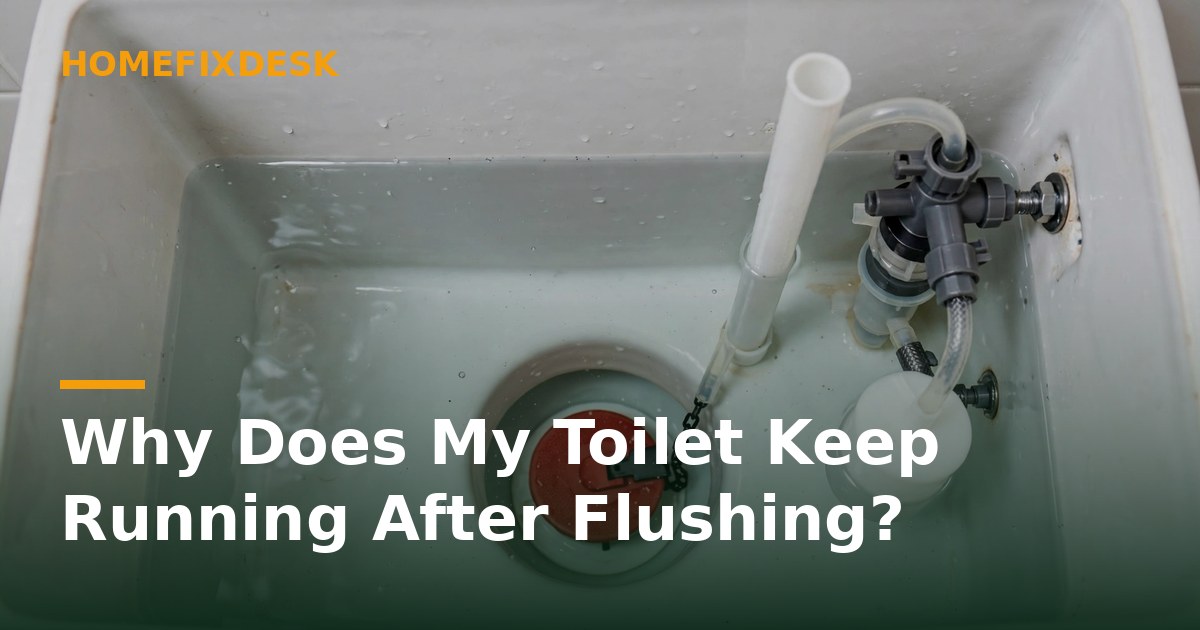
A toilet that keeps running after flushing is almost always caused by water leaking from the tank into the bowl — usually because the rubber flapper is worn out or the fill valve is set too high. The good news: this is one of the easiest plumbing fixes there is. It takes about 15 minutes, requires no special skill, and the parts cost under $10.
A running toilet is not just annoying. It can waste up to 200 gallons of water per day, which shows up fast on your water bill. So it is worth fixing this week, not someday.
Quick diagnosis: find the leak in 2 minutes
Take the lid off the tank and look inside while it is running.
- Is water flowing into the overflow tube? That is the tall, open pipe in the middle of the tank. If water is pouring into it nonstop, the tank is overfilling — jump to the fill valve fix.
- Is the water level normal but you hear hissing or trickling? Do the dye test: add a few drops of food coloring to the tank water and wait 10 minutes without flushing. If color shows up in the bowl, water is leaking past the flapper.
Nine times out of ten, one of these two tests identifies the culprit.
What you will need
- A replacement flapper (universal type, $5–$8) — only if the dye test shows a flapper leak
- An adjustable wrench (for the supply line, if you need to disconnect anything — usually you do not)
- A sponge or old towel
- Food coloring (for the dye test)
No plumber, no special tools, no cutting pipes.
Cause 1: Worn-out flapper (most common)
The flapper is the rubber seal at the bottom of the tank that lifts when you flush and drops back down to seal the tank. Rubber deteriorates in water over time — it warps, gets coated in mineral deposits, or simply rots. When it no longer seals, water trickles into the bowl constantly, and the fill valve keeps refilling the tank to compensate. That is the running sound you hear.
How to fix it:
- Turn off the water supply using the valve behind the toilet (turn clockwise).
- Flush the toilet to empty the tank. Sponge out the remaining water.
- Unhook the old flapper from the two pegs on the overflow tube and detach the chain from the flush lever.
- Take the old flapper to the hardware store to match the size, or buy a universal flapper — they fit most toilets made after 1994.
- Hook the new flapper onto the pegs and reconnect the chain. Leave about half an inch of slack in the chain when the flapper is closed — too tight and it cannot seal, too loose and it tangles.
- Turn the water back on, let the tank fill, and flush twice to confirm the seal.
How long does a flapper last? Typically 3 to 5 years. If your water is high in chlorine or minerals, expect the shorter end. Replacing it on schedule is cheap insurance against a surprise water bill.
Cause 2: Fill valve set too high (or worn out)
The fill valve (sometimes called the ballcock) refills the tank after a flush and is supposed to shut off when the water reaches the correct level. If the float is set too high, water rises above the overflow tube and drains away continuously — the valve never gets the signal to stop.
How to fix it:
- Look at the waterline in the tank. It should sit about one inch below the top of the overflow tube. Most fill valves and overflow tubes have a marked waterline — check for it.
- Find the adjustment mechanism on the fill valve: usually a screw on top or a clip on the side of the float.
- Lower the float, flush, and watch where the water stops. Repeat until the waterline is correct and the valve shuts off completely.
If adjusting does nothing and the valve keeps running regardless of the float position, the valve’s internal seal is worn. A universal fill valve costs $10–$15 and installs in about 20 minutes with the water off: disconnect the supply line, unscrew the old valve’s lock nut under the tank, drop in the new one, reconnect. No plumbing experience needed.
Cause 3: Tangled, short, or corroded chain
Sometimes the problem is embarrassingly simple. If the lift chain is tangled, kinked, or adjusted too short, it holds the flapper slightly open. Open the tank and watch a flush cycle — if the flapper does not drop flat and centered, the chain is the issue. Re-hook it with a little slack, and trim any excess links so they cannot tangle.
Also check that the chain itself is not rusted through. A corroded chain can snap mid-flush and jam the flapper open.
Cause 4: Cracked overflow tube
Less common, but worth checking while you are in there. If the overflow tube itself has a crack below the waterline, water drains through the crack constantly. You will see the water level never quite reaching the fill line. An overflow tube is part of the flush valve assembly — replacing the whole flush valve ($15–$25, about 30 minutes of work) solves it.
What this fix costs
| Repair | Parts cost | Time | Skill level |
|---|---|---|---|
| Replace flapper | $5–$8 | 15 min | Beginner |
| Adjust fill valve | $0 | 5 min | Beginner |
| Replace fill valve | $10–$15 | 20 min | Beginner |
| Replace flush valve | $15–$25 | 30 min | Intermediate |
| Plumber visit | $150–$300+ | — | — |
As you can see, every DIY option here costs less than a tenth of a plumber visit.
Preventing it next time
- Replace the flapper every 3–5 years, before it fails.
- Do not use drop-in tank bleach tablets — the concentrated chlorine destroys rubber flappers and seals far faster than normal. Use in-bowl cleaners instead.
- Once a year, lift the tank lid and check the waterline and chain. Thirty seconds of looking prevents most running-toilet surprises.
Frequently asked questions
Why does my toilet run every few minutes for a few seconds? That pattern — running briefly, stopping, then repeating — is the classic slow flapper leak. Water seeps into the bowl, the tank level drops just enough to trigger the fill valve, it tops up, and the cycle repeats. Replace the flapper.
Is a running toilet an emergency? Not a flooding emergency, but a money emergency. A constantly running toilet can waste thousands of gallons a month. Fix it within days, not weeks.
Can I just jiggle the handle? Jiggling the handle reseats a flapper that did not drop cleanly — it works as a temporary trick, not a fix. If you are jiggling daily, replace the flapper.
My toilet runs but the tank looks fine — what now? Check the refill tube (the small flexible tube from the fill valve). It should clip above the overflow tube, not shoved deep inside it. If it is pushed too far down, it can siphon water continuously. Pull it up so it just rests at the top of the overflow tube.
When to call a plumber
Most running toilets are DIY territory, but call a professional if:
- Water is leaking from the base of the toilet onto the floor — that points to a failed wax ring, which means pulling the whole toilet.
- The shut-off valve behind the toilet is stuck, corroded, or starts leaking when you turn it.
- You have replaced the flapper and the fill valve and it still runs — the flush valve seat may be cracked or the tank itself may have a hairline crack.
- You are on a septic system and unsure about any step — a pro’s judgment is worth it there.
Related questions
- How do I fix a toilet that will not flush all the way?
- Why does my toilet make a hissing sound?
- How do I stop my toilet from sweating in summer?
- How do I unclog a toilet without a plunger?